


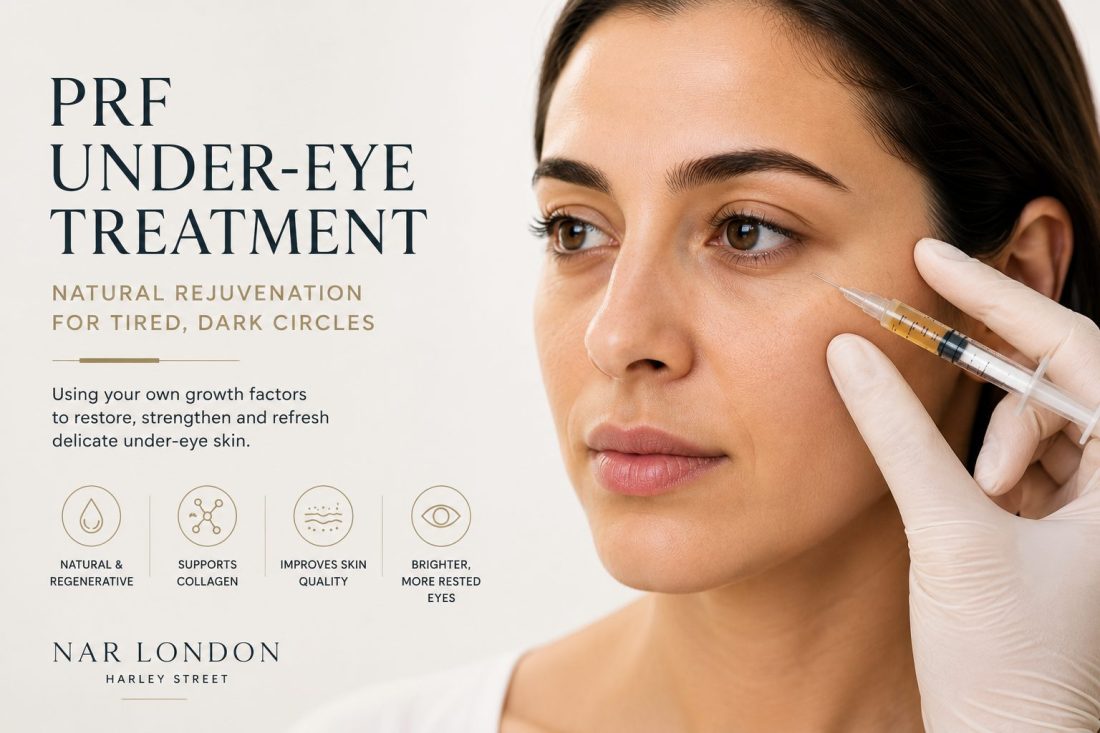
Exploring PRF Under-Eye Treatment in London
PRF Under-Eye Treatment in London: A Guide to Natural Eye Rejuvenation
The under-eye area is one of the first places many people notice tiredness, ageing, stress, and changes in skin quality. Fine lines, crepey texture, hollowing, puffiness, and dark circles can make the face look fatigued even when you feel well-rested. For people looking for a natural-looking, regenerative option, PRF under-eyes treatment has become an increasingly popular alternative to more traditional aesthetic approaches.
PRF, or platelet-rich fibrin, uses a concentrated portion of your own blood to support the skin’s natural repair processes. In aesthetic medicine, it is often used for delicate areas where subtle rejuvenation is preferred over dramatic volume change. The under-eye area is a key example: the skin is thin, the anatomy is complex, and overcorrection can look unnatural.
At NAR LONDON, PRF is used as a natural under-eye treatment for concerns such as dark circles, puffiness, fine lines, mild hollowing, and thin skin, with results developing gradually rather than appearing instantly.
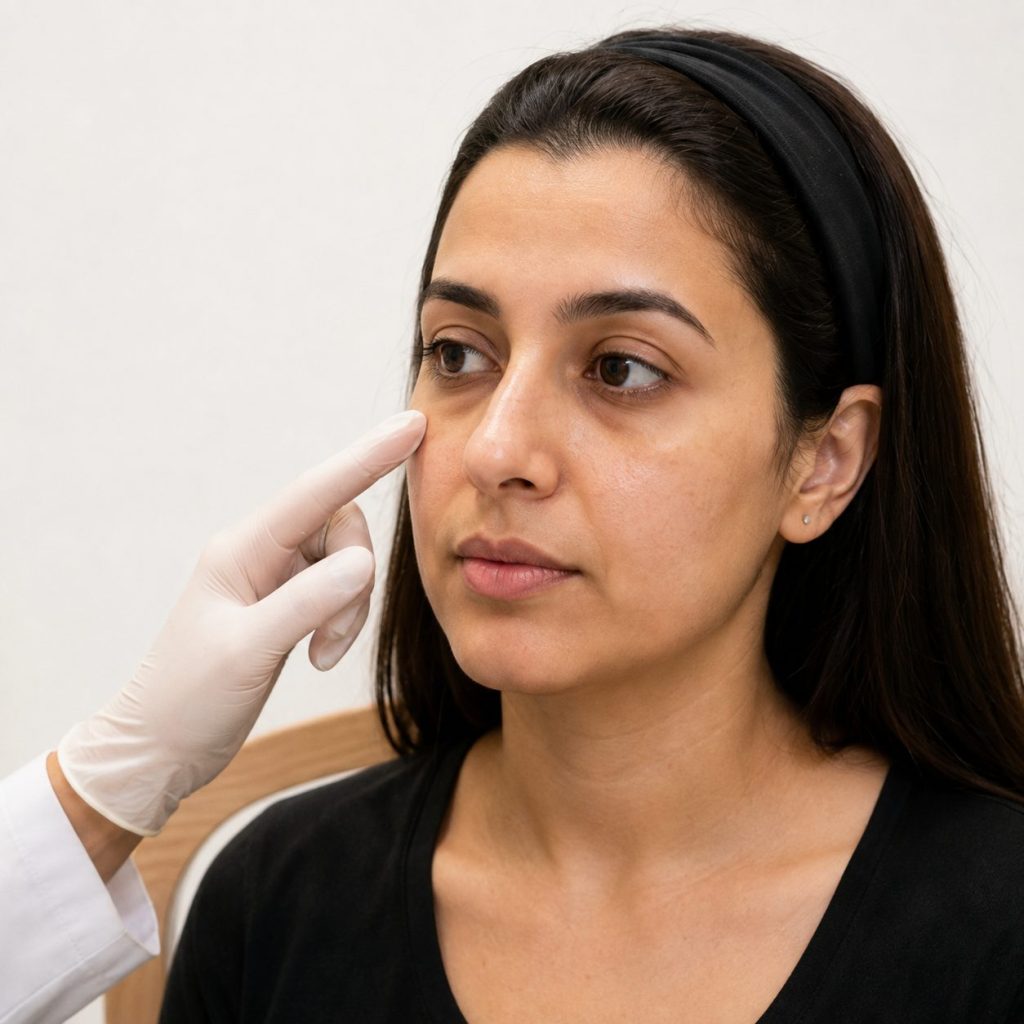
PRF under-eyes consultation
What Is PRF?
PRF stands for platelet-rich fibrin. It is an autologous treatment, meaning it is created from your own blood rather than from a synthetic product. A small blood sample is taken and then processed in a centrifuge to separate and concentrate the components used for treatment.
PRF contains platelets, fibrin, white blood cells, and growth factors. The fibrin matrix is one of the key features that distinguishes PRF from some other blood-derived treatments because it acts like a scaffold, allowing growth factors to be released more gradually in the treated area. Reviews of PRF in dermatology describe it as a second-generation platelet concentrate used in regenerative settings, including skin rejuvenation and tissue repair. (pmc.ncbi.nlm.nih.gov)
In simple terms, PRF therapy is designed to encourage a healthier-looking skin environment. It does not “fill” in exactly the same way as dermal filler, and it does not freeze movement like anti-wrinkle injections. Instead, it works by supporting skin quality, firmness, texture, and overall under-eye freshness over time.
Why the Under-Eye Area Needs a Special Approach
The under-eye area is delicate. Skin here is thinner than in many other facial areas, and it sits over blood vessels, ligaments, fat pads, and bone structures that influence how shadows and hollows appear. This is why under-eye concerns are rarely caused by one factor alone.
Common contributors include:
- Thin or translucent skin, which can make underlying vessels more visible
- Pigmentation, which may create brown or grey-toned dark circles
- Volume loss or tear trough hollowing, which can cast shadows
- Skin laxity, which may cause crepey texture or fine lines
- Puffiness or fluid retention, which can change the under-eye contour
- Lifestyle factors, including sleep, hydration, sun exposure, stress, and allergies
- Genetics, which can strongly influence both pigmentation and anatomy
Because these causes overlap, the best under-eye treatment is not always the same for every person. Some people need skin-quality improvement. Others need structural support. Some may benefit from PRF, while others may be better suited to a different or combined plan.
This is why a consultation is essential before booking any prf treatment for under eyes. A trained practitioner can assess whether your dark circles are mainly pigmentation, shadowing, thin skin, puffiness, or volume-related.
How PRF Treatment Under Eyes Works
A typical PRF treatment under eyes follows a structured process. At NAR LONDON, the procedure generally involves taking a small blood sample, processing it by centrifugation, and then carefully placing the prepared PRF into the under-eye area, often using a cannula technique intended to reduce trauma compared with sharper needle-only approaches.
The process may include:
- Consultation and assessment Our practitioner reviews your concerns, medical history, medications, skin quality, and suitability for treatment.
- Blood draw A small amount of blood is taken, similar to a routine blood test.
- Centrifuge processing The blood is spun at a specific speed to separate the PRF from other blood components.
- Preparation of the treatment area The under-eye area is cleaned, and topical numbing may be used for comfort.
- PRF placement The PRF is placed into the targeted under-eye region with careful technique.
- Aftercare guidance You receive instructions to help minimise swelling, bruising, and irritation.
The appointment is relatively quick for many patients. PRF under-eye sessions typically take around 30 to 45 minutes, depending on the full process and individual needs.
PRF for Dark Circles: What Can It Help With?
Many people search for PRF for dark circles because they want a treatment that looks natural and does not rely on synthetic filler. PRF may be helpful when dark circles are linked to skin thinness, poor skin texture, mild laxity, or the way light reflects from the under-eye area.
It may support improvement in:
- Dull or tired-looking under-eyes
- Fine lines and crepey texture
- Mild under-eye hollowing
- Thin-looking skin
- Uneven tone
- Subtle pigmentation concerns
- Skin firmness and elasticity
However, it is important to be realistic. If dark circles are caused mainly by deep genetic pigmentation, significant tear trough hollowing, prominent under-eye bags, or facial anatomy, PRF alone may not fully correct them. Recent reviews of platelet-rich plasma and platelet-rich fibrin in periorbital aesthetics suggest patient satisfaction can be high, but objective improvements may vary, especially for hyperpigmentation, wrinkles, and texture. (pubmed.ncbi.nlm.nih.gov)
That does not mean PRF is ineffective. It means under-eye PRF works best when matched to the right concern and delivered as part of a personalised treatment plan.
PRF vs PRP: What Is the Difference?
PRF and PRP are often mentioned together, but they are not identical.
PRP, or platelet-rich plasma, is another autologous treatment made from blood. It usually involves plasma with concentrated platelets and may require anticoagulants during preparation.
PRF, or platelet-rich fibrin, is often described as a newer generation of platelet concentrate. It is typically processed at a lower centrifuge speed and forms a fibrin matrix that can hold platelets and growth factors within a supportive structure. Reviews of platelet-derived products in aesthetic medicine note that PRF is produced differently from PRP and can provide fibrin clot formation shortly after injection. (pmc.ncbi.nlm.nih.gov)
For patients, the practical difference is that PRF is often chosen when the goal is slow, subtle, regenerative improvement rather than a quick volumising effect. Based on our experience, PRF is particularly suitable for the under-eye area because of its natural profile and gradual support for collagen, skin tone, and texture.
Benefits of PRF Under-Eyes Treatment
The appeal of prf under-eyes treatment is that it supports rejuvenation without changing the face dramatically. For the right candidate, the results can look refreshed rather than “done.”
Potential benefits include:
- Natural origin: PRF is made from your own blood.
- Gradual results: Improvements develop over weeks as the skin responds.
- Delicate-area suitability: PRF is often used where subtlety is important.
- Skin-quality improvement: It may support smoother texture and firmer-looking skin.
- Dark circle support: It may help certain forms of under-eye darkness, especially where thin skin and poor skin quality contribute.
- Mild volume effect: PRF can create temporary fullness initially and may support subtle tissue quality over time.
- Minimal downtime for many people: Swelling and bruising can occur, but most side effects are temporary.
It is also a good option for people who are cautious about dermal filler under the eyes or who want to improve the under-eye area without surgery.

What Results Should You Expect?
Unlike filler, PRF does not usually create an immediate, fixed structural change. You may notice some early fullness after treatment, but this is often related to the injected fluid and local swelling. The more meaningful changes generally appear gradually as the skin responds.
NAR LONDON notes that visible results may develop over approximately one to two months, with collagen and underlying structures gradually improving. The clinic also recommends a course of three sessions spaced around four to six weeks apart for cumulative results, followed by yearly maintenance where appropriate.
A realistic timeline may look like this:
- Immediately after treatment: Mild swelling, fullness, redness, or bruising may be visible.
- First few days: Puffiness and tenderness usually begin to settle.
- Weeks 2 to 4: Some patients notice early changes in brightness or texture.
- Weeks 6 to 8: More visible improvement may appear as skin quality develops.
- After a course of treatments: Results may become more noticeable and longer lasting.
Individual results vary based on age, skin quality, genetics, lifestyle, medical history, and the underlying cause of the under-eye concern.
Is PRF a Replacement for Filler?
PRF is not a direct replacement for tear trough filler. Both treatments can improve the under-eye area, but they work differently.
Dermal fillers are designed to add volume and contour. They may be suitable for people with true hollowing or structural volume loss, although under-eye filler requires advanced skill because the area is anatomically sensitive.
PRF is more focused on regeneration, skin quality, and subtle rejuvenation. It may be preferable for patients who:
- Want a natural treatment using their own blood
- Have thin, crepey, or tired-looking under-eye skin
- Are not ready for filler
- Have mild rather than severe hollowing
- Prefer gradual improvement
- Want to avoid a noticeably augmented appearance
In some cases, a practitioner may recommend PRF on its own. In others, a combined plan may be more appropriate. The safest approach is to let the anatomy and diagnosis guide the treatment, rather than choosing a treatment based only on a trend or a search for “prf under eyes treatment near me.”
Who Is a Good Candidate for Under-Eye PRF?
You may be a good candidate for under-eye PRF if you are bothered by tired-looking eyes, mild dark circles, fine lines, crepey skin, or subtle hollowing and you want a regenerative treatment with natural-looking results.
PRF may be especially appealing if you:
- Prefer autologous treatments
- Want to improve skin quality rather than simply add volume
- Have realistic expectations
- Can commit to a course of sessions
- Understand that results are gradual
- Are willing to follow aftercare advice
However, PRF may not be suitable for everyone. NAR LONDON lists several possible contraindications, including certain blood clotting disorders, active infections, uncontrolled medical conditions, pregnancy or breastfeeding, and other health considerations that should be discussed during consultation. (narlondon.com)
Always disclose your medications, supplements, allergies, previous aesthetic treatments, and medical history before having any injectable treatment.
What About Downtime and Side Effects?
PRF is minimally invasive, but it is still an injectable treatment. Temporary side effects are possible.
Common post-treatment effects may include:
- Swelling
- Bruising
- Tenderness
- Redness
- Temporary under-eye fullness
- Mild unevenness while swelling settles
At NAR LONDON we advise that light bruising and swelling can last for a few days, and patients should plan ahead if they have an important event or trip. (narlondon.com)
We recommend avoiding strenuous exercise, alcohol, saunas, steam rooms, hot baths, swimming, excessive sun exposure, and massaging the treated area for a short period after treatment. Follow the aftercare guidance given to ensure best results.
How to Prepare for PRF Therapy
Preparation helps support a smoother appointment and recovery. Your clinic will provide personalised instructions, but general preparation may include:
- Arriving well hydrated
- Eating a balanced meal before your appointment unless advised otherwise
- Avoiding alcohol before treatment
- Discussing blood-thinning medication or supplements with your practitioner
- Avoiding unnecessary anti-inflammatory medication if your clinician advises it is safe to do so
- Planning treatment at least several days before important events
- Coming to the clinic with clean skin and minimal makeup around the eye area
Never stop prescribed medication without guidance from your prescribing clinician.
Choosing a PRF Skin Treatment Provider in London
The under-eye area should only be treated by an appropriately trained professional. When researching prf skin treatment or prf treatment under eyes, look beyond convenience and price. The quality of your consultation, assessment, technique, and aftercare matter.
A good provider should offer:
- A careful facial and under-eye assessment
- Clear explanation of whether PRF is right for your concern
- Transparent expectations about results and limitations
- Medical history screening
- Sterile technique and safe blood-handling protocols
- Experience with the delicate under-eye area
- Clear aftercare instructions
- A personalised treatment plan rather than a one-size-fits-all package
If you are searching for prf under eyes treatment near me in London, prioritise a clinic that understands both regenerative aesthetics and periorbital anatomy.
Why Consider NAR LONDON for PRF Under-Eye Treatment?
NAR LONDON offers PRF under-eye treatment in London for dark circles, puffiness, hollow tear troughs, fine lines, and delicate under-eye skin concerns. The clinic describes PRF as a natural option that uses concentrated growth factors from your own blood, with a treatment protocol commonly involving three sessions spaced four to six weeks apart and maintenance where appropriate. (narlondon.com)
The treatment is designed for people who want a refreshed, natural-looking result without surgery or synthetic filler. During consultation, your practitioner can assess whether PRF is suitable for your under-eye anatomy, skin quality, goals, and medical history.
Frequently Asked Questions
Is PRF under-eye treatment painful?
Most patients tolerate the treatment well. A topical numbing cream may be used, and some clinics use a cannula technique to help reduce discomfort and bruising. You may feel pressure, pinching, or mild tenderness.
How many PRF treatments will I need?
Many providers recommend a course rather than a single appointment. NAR LONDON typically recommends three treatments spaced around four to six weeks apart for optimal cumulative results, with yearly maintenance if suitable.
Can PRF remove dark circles completely?
PRF can help some types of dark circles, especially when thin skin, texture, and skin quality contribute. It may be less effective for dark circles caused mainly by deep pigmentation, genetics, or structural shadowing.
Is PRF better than filler for under eyes?
Neither is universally better. PRF is often chosen for natural skin rejuvenation and subtle improvement. Filler may be considered when the main concern is structural hollowing. A consultation is the best way to decide.
How soon can I wear makeup after PRF?
Your practitioner will give specific advice. Many clinics recommend avoiding makeup for at least the initial post-treatment period to reduce irritation and contamination risk.
Is PRF treatment safe?
Because PRF is made from your own blood, it has a natural profile, but injectable treatments still carry risks such as bruising, swelling, infection, asymmetry, or unsatisfactory results. Safety depends on suitability, technique, sterile protocols, and practitioner experience.
Take the Next Step
If you are considering prf treatment for under eyes and want a natural, regenerative approach to tired-looking eyes, dark circles, fine lines, or delicate under-eye skin, a personalised consultation is the best place to start.
Book your PRF under-eyes consultation with NAR LONDON and discover whether PRF is the right under-eye treatment for your skin, goals, and facial anatomy.