


Best Clinic For Korean Glass Skin in London

Korean Glass Skin Glow UK
The Science Behind Korean Glass Skin
By Esra Gulsen – Founder, NAR LONDON, Harley Street
Over the past few years, Korean “glass skin” has become one of the most searched skincare ideas in the world. Feeds are full of complexions that look smooth, luminous and almost translucent; countless products promise the look in a bottle, and clinics everywhere advertise treatments claiming to create it. Yet nearly all of it rests on a single misunderstanding.
Glass skin is not a cream, a facial or an injectable. It is the visible expression of healthy skin biology – the natural result of skin that is smooth, well hydrated and structurally sound. At NAR LONDON, we think that distinction changes everything. Instead of asking “how do I make my skin look shinier?”, the more useful question is “what makes healthy skin reflect light in the first place?” That question sits at the heart of regenerative aesthetics, and it’s what this article is really about.
What “glass skin” actually means?
The term originated in South Korea to describe skin that simply looks exceptionally healthy — not oily, not covered in makeup, not artificially shiny. Skin that reads as smooth, hydrated, even in tone, refined in texture and softly luminous. The glow comes from the quality of the skin itself, which is why it can’t meaningfully be applied from the outside. It has to be supported from within, over time.
Why healthy skin reflects light differently?
The most common misconception is that glass skin is about making skin shiny. In fact, the opposite is closer to the truth. When skin is smooth and well hydrated, its surface is even, and light striking it bounces back in an organised, uniform way — producing that soft, luminous quality. When skin becomes dehydrated, inflamed or structurally compromised, the surface turns irregular, and light scatters in many directions instead. The result reads as dull, tired and uneven. This is why improving genuine skin quality matters far more than adding temporary surface shine.
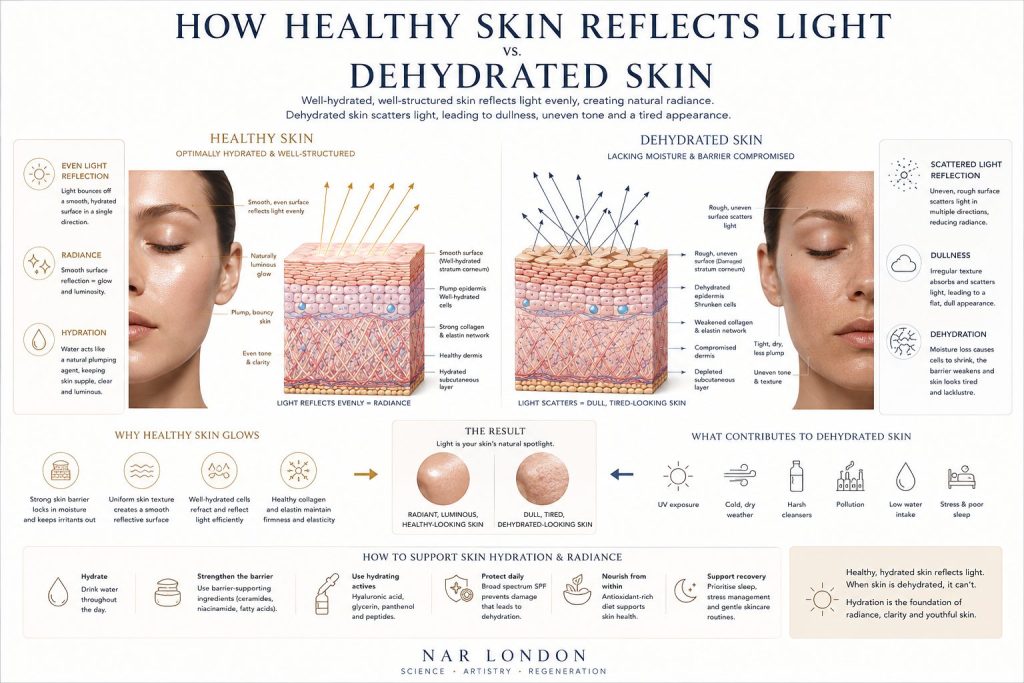
Diagram How Healthy Skin Reflects Light vs. Dehydrated Skin
The skin barrier: the foundation of everything
Every day, the outermost layer of your skin – the skin barrier – holds moisture in and keeps irritants out. When it’s working well, hydration stays balanced, sensitivity is low, inflammation is kept in check, and the surface stays smooth enough to reflect light evenly. When it’s compromised by excessive UV, pollution, over-active skincare routines or dehydration, water escapes more easily and the picture changes: dryness, redness, irritation and rough texture. Before anyone thinks about “glow,” a healthy barrier is the thing worth restoring first, because everything else is built on top of it.
Collagen: the architecture behind radiant skin
Collagen is usually talked about in the context of wrinkles, but its role is more fundamental than that. It’s the structural framework that keeps skin firm, resilient and smooth. From our mid-twenties onward, collagen production gradually slows, and factors such as sun exposure, pollution, smoking and chronic inflammation speed that decline. As collagen becomes thinner and more fragmented, skin loses a little elasticity, pores can look larger, texture becomes less even and – because the surface is less organised – it reflects light less well. Supporting healthy collagen is therefore one of the most meaningful things you can do for naturally luminous skin, and much of it comes down to protection: unprotected UV exposure is one of the largest drivers of collagen breakdown over a lifetime.
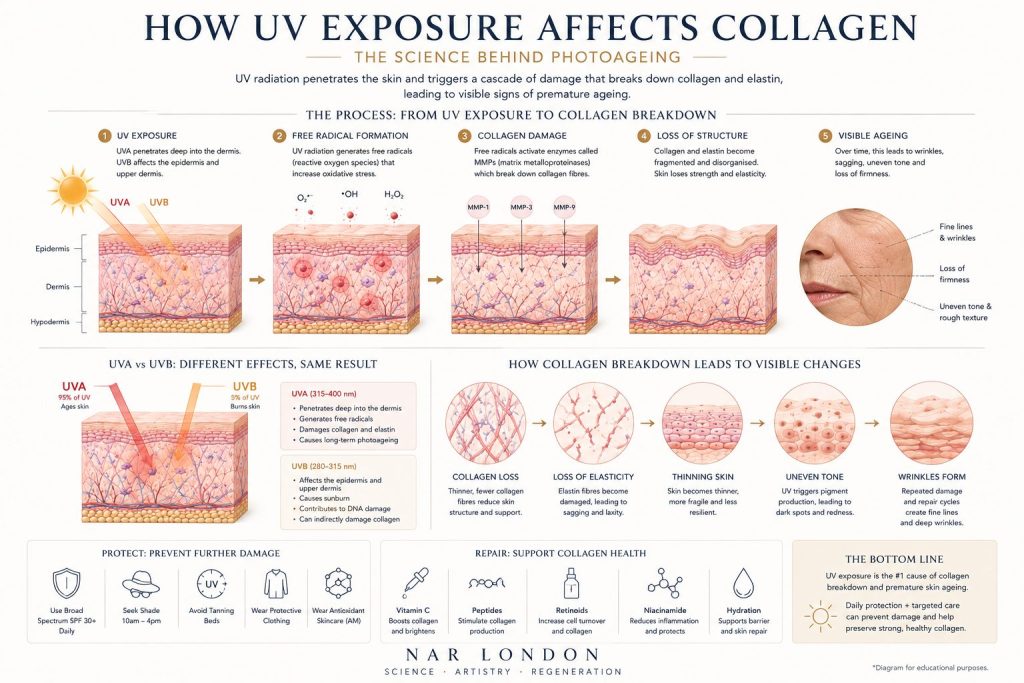
Diagram about How UV Exposure Affects Collagen
Hydration is more than drinking water
It’s tempting to assume dehydrated skin just needs more water to drink. In reality, how well skin holds hydration depends on several things working together: an intact barrier, the skin’s own natural moisturising factors, and healthy levels of collagen and hyaluronic acid. That’s why hydration is usually improved through a combination of skincare, nutrition, lifestyle and – where appropriate – treatments, rather than any single fix.
Inflammation: the quiet factor
One of the defining principles of Korean skincare is prevention: rather than only treating visible ageing once it appears, the aim is to reduce the biological processes that accelerate it. Chronic, low-grade inflammation is one of the most important of these. Over time it can influence collagen, barrier integrity, pigmentation and overall skin quality.
And the things that feed it are often not on the face at all – UV, pollution, smoking, stress, poor sleep, nutritional gaps, hormonal shifts and gut health can all play a part. It’s one of the clearest reasons that healthy skin so often reflects good overall health, and why, at NAR LONDON, a conversation about skin sometimes becomes a conversation about wellbeing.
Why regenerative thinking is different?
Traditional aesthetic medicine has often focused on correcting individual visible signs of ageing — softening a line, filling a fold. Regenerative aesthetics asks a different question: how do we improve the quality of the skin itself? When skin becomes genuinely healthier, many visible concerns tend to ease on their own. The goal isn’t to change your face. It’s to improve your skin.
How regenerative treatments can support glass skin?
There is no single “glass skin treatment.” Different approaches support different aspects of skin biology, and the right one – if any – depends entirely on the individual. Used appropriately, these are some of the tools that can help:
Rejuran® uses salmon-derived polynucleotides to support the skin’s own repair processes and improve skin quality over time. Profhilo® delivers ultra-pure hyaluronic acid that deeply hydrates while supporting collagen and elastin, which can help elasticity and luminosity. PRF (platelet-rich fibrin) uses your own blood-derived growth factors to encourage natural repair and collagen production. Polynucleotides more broadly support repair, hydration and skin resilience. Autologous exosomes are a regenerative signalling approach derived from your own blood [confirm this description and any claims match exactly what NAR LONDON is licensed and permitted to offer and advertise in the UK before publishing]. And microneedling stimulates the skin’s natural wound-healing response to support collagen and smoother texture.
Each works differently, but they share one objective: improving the quality of your skin rather than masking its appearance. Which — if any – suits you is a decision for a consultation, not a trend.
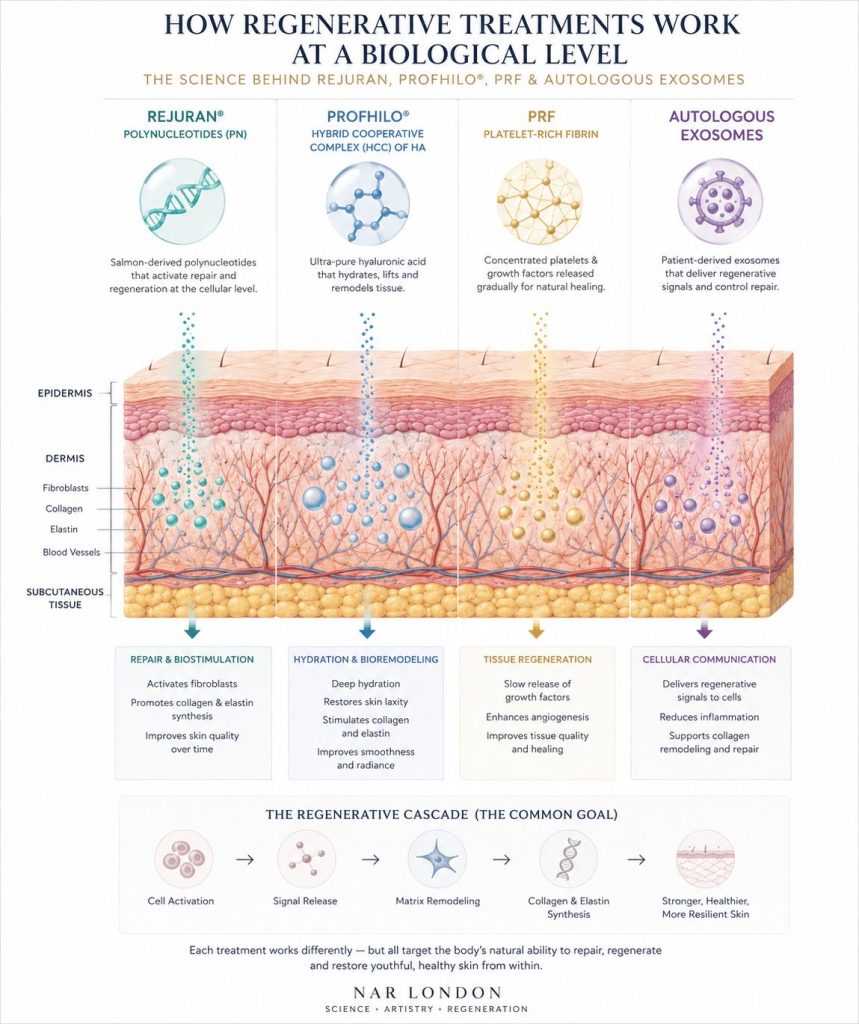
Diagram about Regenerative skin treatments
Glass skin begins long before any treatment
Perhaps the most valuable lesson from Korean skincare is that healthy skin is built in small, daily ways, and that consistent habits often outweigh occasional treatments over the long term. Daily SPF, good hydration, a protected barrier, enough protein, plenty of colourful fruit and vegetables, quality sleep, managed stress, regular movement, not smoking and attention to gut health all shape skin quality more than most people expect. At NAR LONDON we see treatments as one part of a much bigger picture – skin is supported from the outside and the inside at once.
Can everyone achieve glass skin?
Not everyone will have naturally poreless or translucent skin – genetics, age, hormones and lifestyle all play a role, and that’s entirely normal. But almost everyone can improve their hydration, texture, elasticity, skin quality and luminosity. The goal was never perfection. It’s simply healthier skin than you had before.
Our philosophy
We don’t chase trends. We believe healthy skin comes from consistent, thoughtful care – and that care looks different for every person. Sometimes it involves a regenerative treatment. Sometimes it’s better skincare. Sometimes it means looking at nutrition, hormones or gut health. And sometimes the most honest advice we can give is simply to carry on with what’s already working. Every recommendation begins by understanding your skin – and deciding what is, and just as importantly what isn’t, appropriate for you. Real radiance is never created overnight; it develops when healthy biology is supported over time.
Common questions about glass skin
Is glass skin the same as oily skin?
No. Healthy glass skin reflects light because it’s smooth and well hydrated, not because it produces excess oil.
Which treatment is best for glass skin?
There isn’t a single best treatment. The most appropriate option depends on your skin quality, hydration, age, concerns and goals. Approaches such as Rejuran®, Profhilo®, PRF, polynucleotides and microneedling all work differently and suit different people.
Is Rejuran the “glass skin treatment”?
Rejuran is often associated with Korean regenerative aesthetics because it can help improve skin quality and support repair, but healthier, more luminous skin usually comes from combining good skincare, healthy habits and, where appropriate, regenerative treatment — not from one product alone.
How long does it take to see a difference?
Healthy skin develops gradually. Hydration can improve relatively quickly, but changes in collagen, texture and overall skin quality typically develop over several weeks to months.
Is glass skin possible after 40? Yes. Collagen naturally declines with age, but many people see meaningful improvements in hydration, skin quality and luminosity through a combination of lifestyle, skincare and personalised regenerative treatments.
Begin with healthy skin
If you’d like to improve your skin quality, hydration and natural radiance, the first step isn’t choosing a treatment — it’s understanding your skin. Every consultation at NAR LONDON begins with a personalised assessment of your skin, your goals and your overall health, so that any recommendation is genuinely right for you. Whether that involves regenerative aesthetics, skincare advice or integrative health, the aim is the same: to help your skin become naturally healthier, stronger and more luminous over time.
Book Rejuran Glass Skin Glow → here
Book a consultation → here
This article is for educational purposes and does not constitute medical advice. Individual results vary, and the suitability of any treatment is determined during a personal consultation or speak to your practitioner.
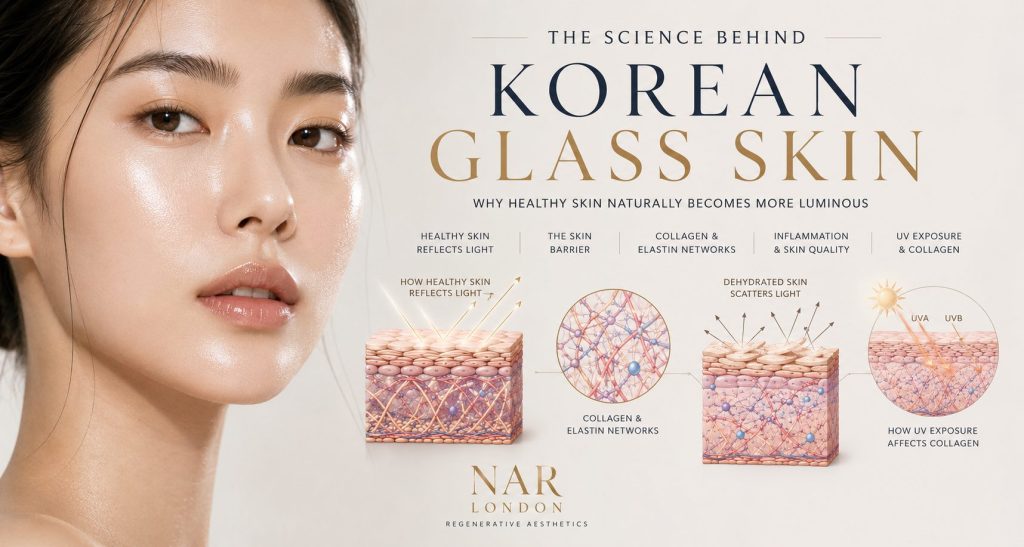
science behind korean glass skin treatment in London